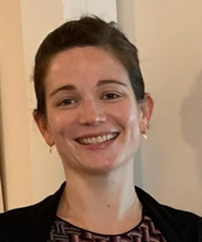


Our community newsletter puts a spotlight on people who have gone above and beyond in their efforts to support CRVS programmes in Asia and the Pacific, raise awareness of CRVS issues or lead CRVS improvement efforts in their home country or in the region. This month, we would like to dedicate this issue of Insight to Azizbek Ashurov.
What is your current title and role?
I am a lawyer and human rights advocate working on statelessness, nationality, and legal identity in Central Asia. I currently serve as the Coordinator of the Central Asian Network on Statelessness (CANS), a regional platform that brings together civil society organizations, academics, and legal experts working to prevent and reduce statelessness.
My work focuses on strengthening legal frameworks, improving access to civil registration, and ensuring that nationality systems are inclusive. I work closely with governments, UNHCR, UN agencies, and civil society partners to promote CRVS as a foundation for legal identity, protection, and sustainable development.
Can you please share with us a particular experience which highlighted the importance of CRVS to you?
The importance of CRVS is deeply personal to me. After the collapse of the Soviet Union, my family and I lived for several years without nationality. During that time, I had no passport, no legal identity, and no access to many basic rights. I was part of society, but legally I did not exist.
Later, as a civil activist and lawyer, I encountered many similar cases across Central Asia. I met people who were never registered at birth, individuals holding unrecognized Soviet-era documents, and parents who could not register the births of their children because they lacked valid documents themselves. This created a cycle where the lack of civil registration was passed from one generation to the next, putting children at risk of statelessness from birth.
These experiences clearly showed me that without inclusive CRVS systems, people remain invisible and excluded, and statelessness becomes very difficult to prevent.
How are you currently involved in CRVS improvements?
I am involved in CRVS improvements at both national and regional levels. In the Kyrgyz Republic, I worked with civil society, government institutions, and UNHCR to support a national campaign to end statelessness. Mobile legal teams travelled to villages, remote settlements, and prisons to help people obtain birth certificates, restore missing civil records, and access nationality procedures.
Over four years, more than 13,000 people acquired Kyrgyz nationality, and in 2019 Kyrgyzstan became the first country in the world to resolve all known cases of statelessness on its territory.
At the regional level, through CANS, we support cooperation and knowledge-sharing among organizations across Central Asia to strengthen inclusive CRVS systems, improve late birth registration procedures, and prevent new cases of statelessness. We also contribute to regional policy dialogue linked to the Ashgabat Declaration on Ending Statelessness in Central Asia (2024) and UNHCR’s Global Alliance to End Statelessness.
Which advice would you give to others trying to improve CRVS systems?
First, make CRVS inclusive. Every child must be registered at birth, regardless of their parents’ legal status or documentation.
Second, remove legal and practical barriers. Allow late registration and flexible procedures so that people affected by migration, historical documentation gaps, or poverty are not excluded.
Third, actively reach those left behind. Mobile registration units and strong partnerships with civil society are essential.
Finally, see CRVS as more than a technical system. Inclusive CRVS supports human rights, reduces inequality, and strengthens trust between people and the State. Progress takes time, cooperation, and persistence—but the impact is transformational.