
Newsletter: CRVS Insight January 2021
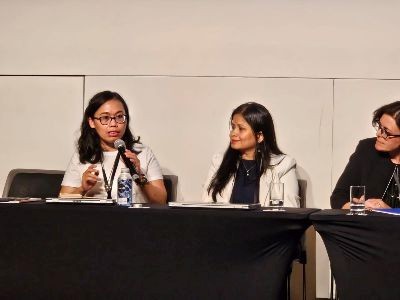
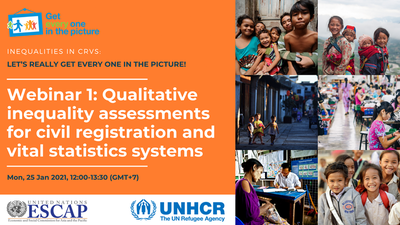
The ESCAP Statistics Division, in collaboration with international and national organizations, organized a three-part seminar series under the theme, “Inequalities in CRVS: Let’s really get every one in the picture!” as part of the Stats Café series. This three-part series provided practical and clear guidance on measuring the inequalities in CRVS with the ultimate goal of narrowing the gap in civil registration. Each seminar comprised a webinar open to all, and a subsequent Expert Group Meeting on the same topic which was by invitation only. All webinars were opened to everyone and were held from 12:00 to 13:30 (Bangkok time).
Webinar 1: Qualitative Inequality assessments of the CRVS systems, 25 January 2021 (Meeting record)
Webinar 2: Using secondary sources to assess inequality in civil registration, 8 February 2021 (Meeting record)
Webinar 3: Indirect demographic methods for measuring completeness and coverage for low capacity countries, 08 March 2021 (Meeting record)
The first webinar on inequality focused on methods for qualitative assessments of CRVS systems, including through the Bali Process Toolkit. The session explored questions such as: What are the challenges in implementing a qualitative assessment of CRVS systems? How can they be addressed? What is the Bali process toolkit process all about? How can it be improved? Can it be extended to capture inequalities in the wider population? What must be considered when adopting a qualitative framework for inequality assessments in CRVS? The session was followed by an EGM to reflect on the discussions of the webinar.
The second webinar focused on the use of secondary sources to assess inequalities, including censuses, surveys or administrative sources. It addressed questions such as: What are the advantages and disadvantages of the different data sources for assessing inequality in civil registration? What are the criteria for determining which data sources are the most appropriate, when are they appropriate to be used, which assumptions are made and do those assumptions hold? How may these data sources be improved to be a better resource for assessing inequality? The session was also followed by an EGM to reflect on the discussions of the webinar.