
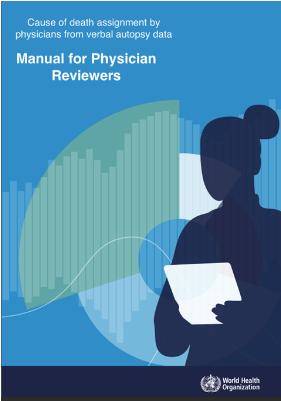
The World Health Organization (WHO) has released a technical manual for the assignment of causes of death via verbal autopsy (VA). The publication, Cause of Death Assignment by Physicians from Verbal Autopsy Data, establishes a standardized methodological framework for extracting clinical insights from interviews with caregivers in regions where formal medical certification is frequently unavailable. By reconstructing the symptoms and circumstances preceding a death through structured inquiry, verbal autopsy serves as the primary evidence base for public health planning in resource-constrained settings.
While the global health landscape has seen a rapid expansion of automated, computer-coded systems (CCVA) to support civil registration and vital statistics, the manual reaffirms the continued importance and use of Physician-Certified Verbal Autopsy (PCVA). This expert-led approach ensures that mortality data retains a high degree of clinical accuracy and remains strictly aligned with international practice. The manual offers exhaustive definitions and instructions for certifying and coding causes of death using the International Classification of Diseases (ICD), providing physicians with a sophisticated toolkit to identify the underlying, immediate, and antecedent causes of death, as well as contributory factors.
Specialized guidance is included for a broad spectrum of conditions on the WHO’s target list, including stillbirths, perinatal causes, infectious diseases, COVID-19, non-communicable diseases, and neoplasms. By standardizing the interpretation of these complex cases and providing clear diagnostic guidance, the framework supports the improved comparability and quality of mortality statistics and standards for statistical tabulation. Furthermore, the manual outlines the structural characteristics of the WHO verbal autopsy instrument and introduces a broad training curriculum. Consequently, it will equip medical practitioners with the specialized skills required to accurately review data, effectively reinforcing verbal autopsy as a vital, professionalized component of national mortality surveillance systems.
Download the manual here.