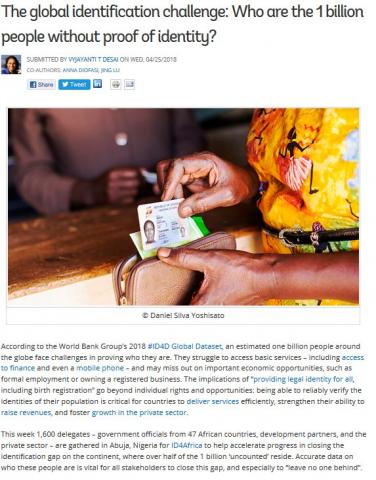
The World Bank released the 2018 edition of the ID4D Global Dataset. According to the data at hand, an estimated of one billion people worldwide face challenges in proving who they are. Consequently, they struggle to access basic services and can be excluded from formal employment opportunities. The dataset further sheds light on who these one billion people living without official proof of identity are. Around 81% live in Sub-Saharan Africa and South Asia, 63% live in lower-middle income economies, 28% live in low-income economies. In the later, a large gender gap characterizes the unregistered population – over 45% of women lack official proof of identity compared to 30% of men. More detailed information on the global identification challenge can be found on the ID4D website, where the 2018 ID4D Global Dataset is also available for download.

News & Events

25 Apr 2018
World Bank publishes 2018 ID4D Global Dataset
More News
30 January 2026
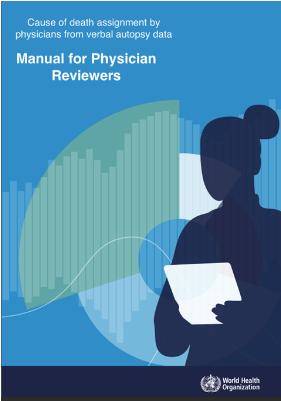
The World Health Organization (WHO) has released a technical manual for the assignment of causes of…

30 January 2026
After the pilot digital birth certificate programme in 2024 for people born in New South Wales,…

30 January 2026
Japan’s digital identity system reached a pivotal milestone as Matsumoto Hisashi, Minister…

30 January 2026
Following the success of its soft launch for BruneiID App in November 2025, Ministry of Home…

30 January 2026
Our community newsletter puts a spotlight on people who have gone above and beyond in their efforts…

30 December 2025
Our community newsletter puts a spotlight on people who have gone above and beyond in their efforts…

30 December 2025
A new discussion paper by ESCAP, in collaboration with UNFPA and Vital Strategies, reviews the…

30 December 2025
Kazakhstan has reached a significant milestone in child rights protection, achieving an almost…

30 December 2025
Photo credit: UNFPA / Asad ZaidiAs the annual 16 Days of Activism against Gender-Based Violence (…

30 December 2025
In an increasingly digital world, incomplete birth records are emerging as a major barrier to…